Lima Film Festival: 1976, by Manuela Martelli
September 8, 2022
By Sofía Alvarez Salas
September 8, 2022
By Sofía Alvarez Salas
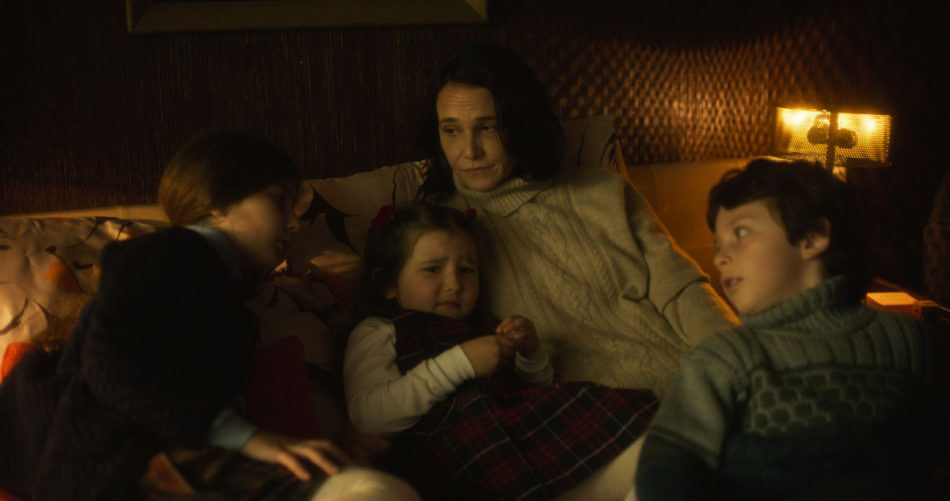
The debut feature by Manuela Martelli, selected for the Directors' Fortnight at this year’s Cannes Film Festival and winner of the APRECI Award at the Lima Film Festival, offers an honest look at the imposed indifference in repressive societies. In this case, as the title suggests, during the year 1976 amid Augusto Pinochet’s brutal dictatorship in Chile.
Martelli succeeds through the subtlety with which both the daily situations and the restrained performances are handled—everything happens in secrecy, everything must be hidden. We breathe the dictatorship, but we are not its direct victims, and therefore, we must remain silent—a complicit silence.
The story follows Carmen, masterfully played by Aline Küppenheim, a housewife and member of the Chilean bourgeoisie. A victim of her time, she transcends the archetype, portrayed with great care by the director. At first glance, Carmen appears timid, but just beneath the surface lies a complex inner world shaped by antidepressants and the sexism that stifled her spirit and professional growth.
A woman very much of her era on the surface, yet one who stands out for her retained humanity—something that often disappears during times of war. This humanity, lost in the name of survival, represents a double loss, and Martelli makes sure we see that clearly. Her experience as an actress is evident in the thoughtful construction of the protagonist, who strikes the perfect balance for a viewer outside Chile trying to engage with such a local theme.
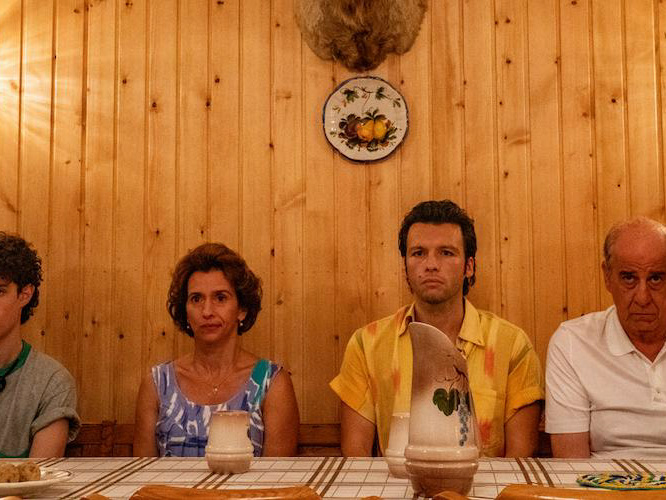
During a family vacation, Carmen is asked to do something unusual and dangerous: shelter a man. She’s given no details, but it’s clear he’s a wounded member of the opposition, and she, with her medical knowledge, is the only one who can help. Through this situation, Carmen transitions from “war bystander” to someone risking everything in an act of betrayal unimaginable for someone of her social standing.
But perhaps not so unimaginable for someone who is also deeply repressed in her personal life. This duality—Carmen as the perfect grandmother and the near-doctor—is what makes her the perfect vessel to take us on this suspenseful and anxiety-ridden journey that tightens with each passing second. Yet it does so while maintaining a sense of “false security,” allowing us to observe the events from a distance, a distance that tricks us into thinking we are safe.
The viewer is placed precisely in this space, watching as the story unfolds. The staging situates us in a privileged position that ultimately becomes a suffocating burden of guilt.
Martelli takes on a role rarely explored in stories about these conflicts, and her very first scene makes it clear: our protagonist is choosing a new paint color for her home—a metaphorical blue that will soon be stained red. Violence is so near that its consequences literally fall at her feet.
The atmosphere is one of perpetual suspense, a life lived in agony and hiding. Carmen not only shelters someone in hiding; she herself is in hiding. That is the genius of this Chilean film. We are inside a matryoshka doll, peeking into a society marked by deep wounds, under the shadow of a dictatorship.
This Chilean-Argentine co-production leaves a lingering discomfort after the story ends. So much is at stake, and the weight of accumulated guilt accompanies us to a devastating, implosive ending—one that seals a story we know continued for many more years to come.