[Netflix] Da 5 Bloods: From Vietnam to #BlackLivesMatter
July 7, 2020
Sofía Alvarez Salas
July 7, 2020
Sofía Alvarez Salas
Da 5 Bloods, the most recent Spike Lee joint, premiered at a pivotal moment—locally, amid the rise of the #BlackLivesMatter movement in the United States, and globally, with much of the world still confined to their homes and many with access to Netflix.
Spike Lee has built a career exploring the Black experience in America—an experience marked by systemic violence and invisibility, particularly at the hands of police and society at large. From Do the Right Thing to BlacKkKlansman, his work consistently interrogates these themes. In many ways, Da 5 Bloods feels like the culmination of this artistic journey—a historical stance on the role of Black Americans, from the Vietnam War to the present day.
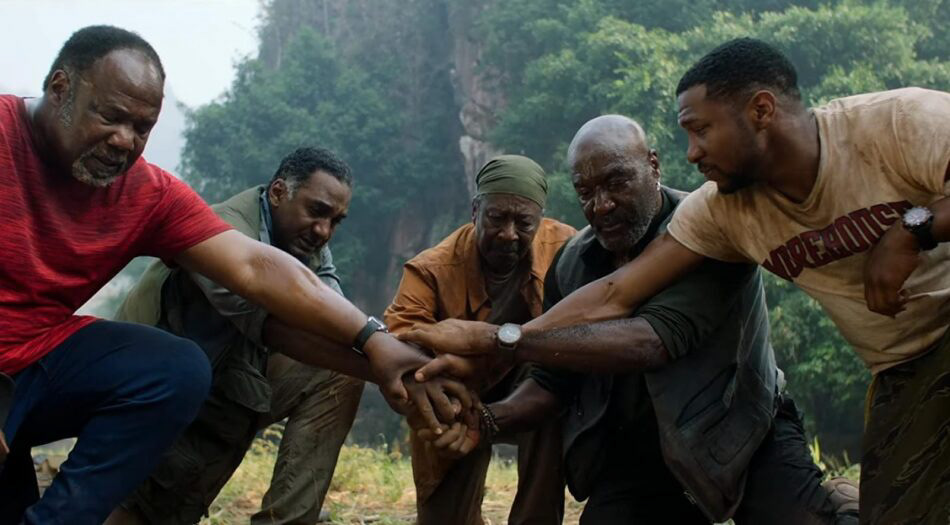
In Da 5 Bloods, we follow four Vietnam War veterans as they return to Vietnam in search of their fallen comrade’s remains—and a treasure they once buried in the jungle.
Lee tells this story through flashbacks that contextualize the world these men came from: from the Civil Rights Movement of the 1960s to the very real and raw experiences of fighting for a country that denied them basic human rights. Rights for which figures like Martin Luther King Jr. and Malcolm X were fighting at the same time.
As the veterans return to Vietnam, the film makes clear that not much has changed back home in America. The flashbacks draw parallels between the social climate of the past and the present. Despite having served in a brutal war, these men returned to a society that continued to discriminate against them. The trauma of war left deep scars—abandoned children, unresolved wounds, and regrets that shaped the rest of their lives.
They carry the memory of their fallen leader like a shadow. Honoring him by returning his remains to the U.S. becomes their mission. For them, he was a hero—someone who led them with honor. His death mirrors the assassinations of Civil Rights leaders at the time. The group mourns both personal and collective losses—a metaphor for the permanent state of mourning that defines the Black experience in the U.S., where lives are constantly lost in the name of "justice" or "patriotism."
Each of the four friends represents a different expression of that mourning—including contradictions. One of them is a Trump supporter, even wearing the infamous MAGA hat, despite the president’s stance on race. Lee plays with this idea: that Black Americans are not a monolith. Their experiences are shaped by similar policies, but their political views can differ dramatically. Though they share a common trauma, they have led very different lives.
Lee does not present idealized characters. The “Bloods” make mistakes and wrestle with strained family relationships. They know they’re not always doing the right thing, but they can’t escape themselves. They romanticize the treasure they buried in Vietnam as something that could fix all the injustices they’ve faced—as if finally receiving the payment they never got for their service.
One of the most compelling aspects of Da 5 Bloods is its treatment of taboo topics within the Black community, such as mental health. There’s a scene in which panic attacks are discussed, and it’s revealed that several characters needed professional help to recover from their trauma.
The film’s editing plays a major role in shaping the narrative. Archival footage of the Civil Rights Movement is shown in a different format from the rest of the film, as are the war flashbacks. This visual language helps distinguish three timelines: the political context, the memory, and the present.
Lee is very aware of how unusual it is to center Black Vietnam veterans onscreen, subverting the typical image of the white American soldier. He even addresses this within the film: the characters complain that war movies never feature people who look like them, so they have no interest in watching them. It’s a stark reminder that, although Black Americans were often on the frontlines, they were rarely seen on the screen. Even during the war, this wasn’t lost on the Vietnamese. A seductive female radio host from the Viet Cong taunts the American soldiers with music and messages, reminding them that even as they invade Vietnam, they are fighting a war of their own back home.
What sets Da 5 Bloods apart from Lee’s other films is its meditative quality—its focus on loss. The characters are older, filled with regrets they cannot shake. The younger characters provide comic relief during the mission to recover the treasure and honor their fallen comrade. But these lighthearted moments also highlight how the new generation is already burdened by racial discrimination.
For instance, their Vietnamese guide is viewed with suspicion in public, and the son of one of the Bloods is met with alienating stares at a local restaurant. Even when they manage to connect with others, they are always seen as outsiders. Vietnam doesn’t want another American invasion.
It’s interesting to note how many iconic directors are now telling stories rooted in nostalgia. Alongside Lee, we’ve seen similar moves from Tarantino and Scorsese. In Da 5 Bloods, however, the story’s relevance is painfully current. Still, Lee’s gaze suggests a deeper concern: the need for reconciliation—with their children, with their past, with themselves.
Da 5 Bloods is the work of a veteran filmmaker reflecting on what it means to reach a certain point in life and assess what you’ve accomplished—and what you’ve failed to do. The film’s ending reinforces this: while the characters may not find resolution, the next generation will inherit the fight.