A Poetic Ode to Everyday Life: Wim Wenders’ Latest Masterpiece
A poetic reflection on the experience of being alive, delivered by the multifaceted director Wim Wenders. The visionary behind the contemplative Paris, Texas (1984) now brings us a delicate portrait of ordinary life, following the daily routine of a humble toilet cleaner in the fast-paced, modern-day Tokyo.
This is the story of a man who finds beauty in the mundane, in the spaces most overlook, crafting a sense of order in a world that many might dismiss as insignificant.
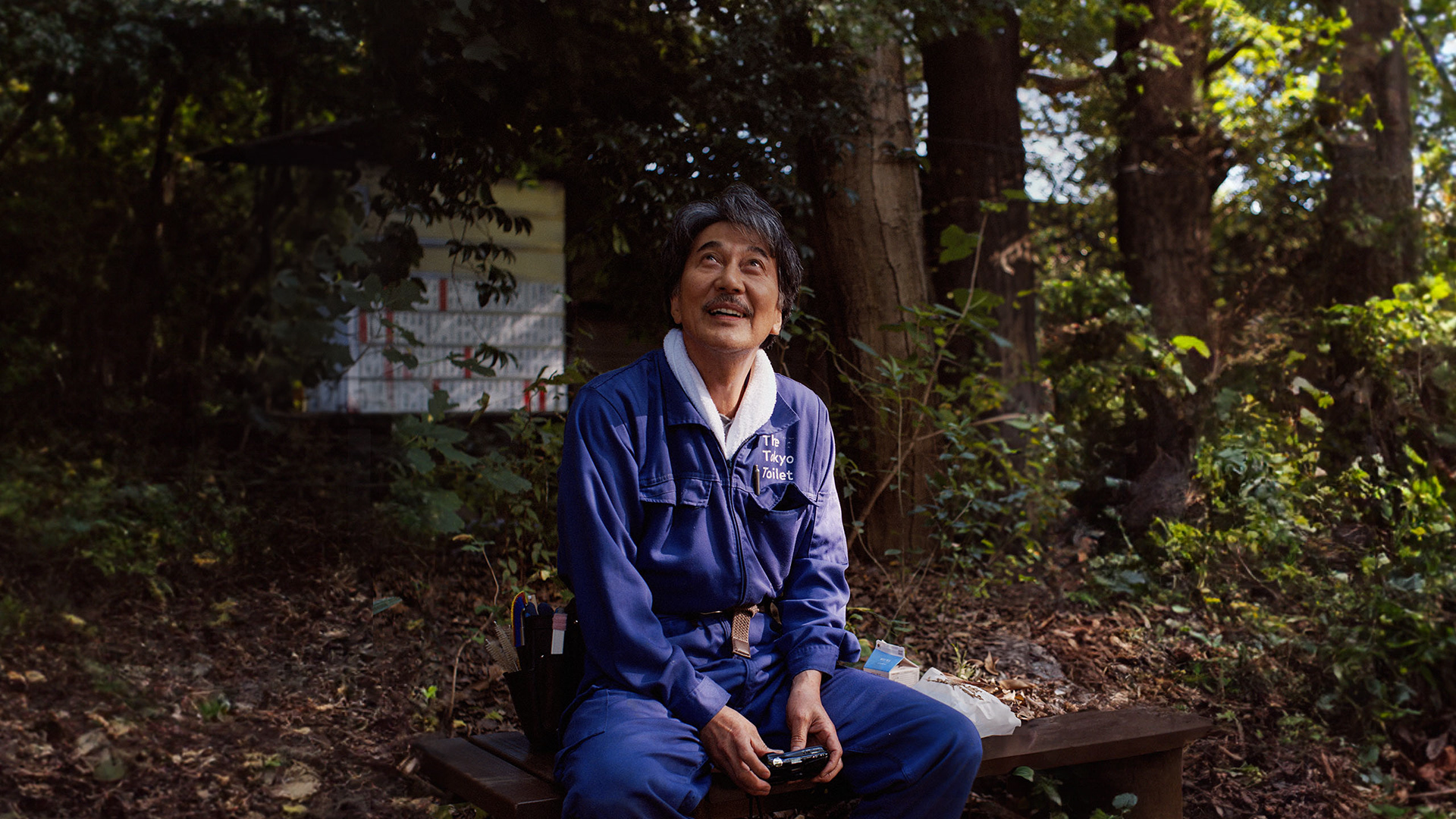
Wenders collaborates with Kōji Yakusho, who brings remarkable purity to the role of Hirayama, a reserved man with a structured life. In his free time, he listens to American music, reads books, and finds quiet appreciation in the simple moments that surround him.
His deep appreciation for culture, nature, and the people on the fringes of his world presents an alternative view of modern life—one that challenges conventional metrics of success, such as wealth or family. Instead, the film proposes a different kind of fulfillment: finding contentment in simplicity.
Despite his peaceful existence, Hirayama is not oblivious to the world’s chaos, and Wenders ensures we see this contrast. Moments of disruption creep into his structured life—his young coworker, desperate to impress women despite being broke, pressures him to sell his vintage rock cassettes from the 70s. These tapes, once considered outdated, now hold the same nostalgic value as contemporary mindfulness trends—practices that, ironically, were never meant to be abandoned in the first place.
Hirayama’s calm demeanor is not accidental—it is an intentional and continuous effort. His tranquility is not mere coincidence but a conscious choice, a persistent act of self-preservation.
Beyond its meditation on daily life, the film contemplates a universal concern: transcendence. It challenges conventional perceptions of aging and mortality, presenting a man who has deliberately let go of a more traditional life path—one that could have offered financial stability, family obligations, or romantic companionship. Yet, he chooses solitude, valuing his carefully cultivated peace above all else.
As in Wenders’ previous films, this story is not about judgment or glorification, but rather an exploration of the many different ways a life can be lived. Each choice is valid, contributing to the broader landscape that Hirayama quietly observes each day. The beauty of life lies in its contrasts.
Currently playing in theaters across Spain, this film is a must-watch for those seeking a deeply thoughtful, visually poetic experience.